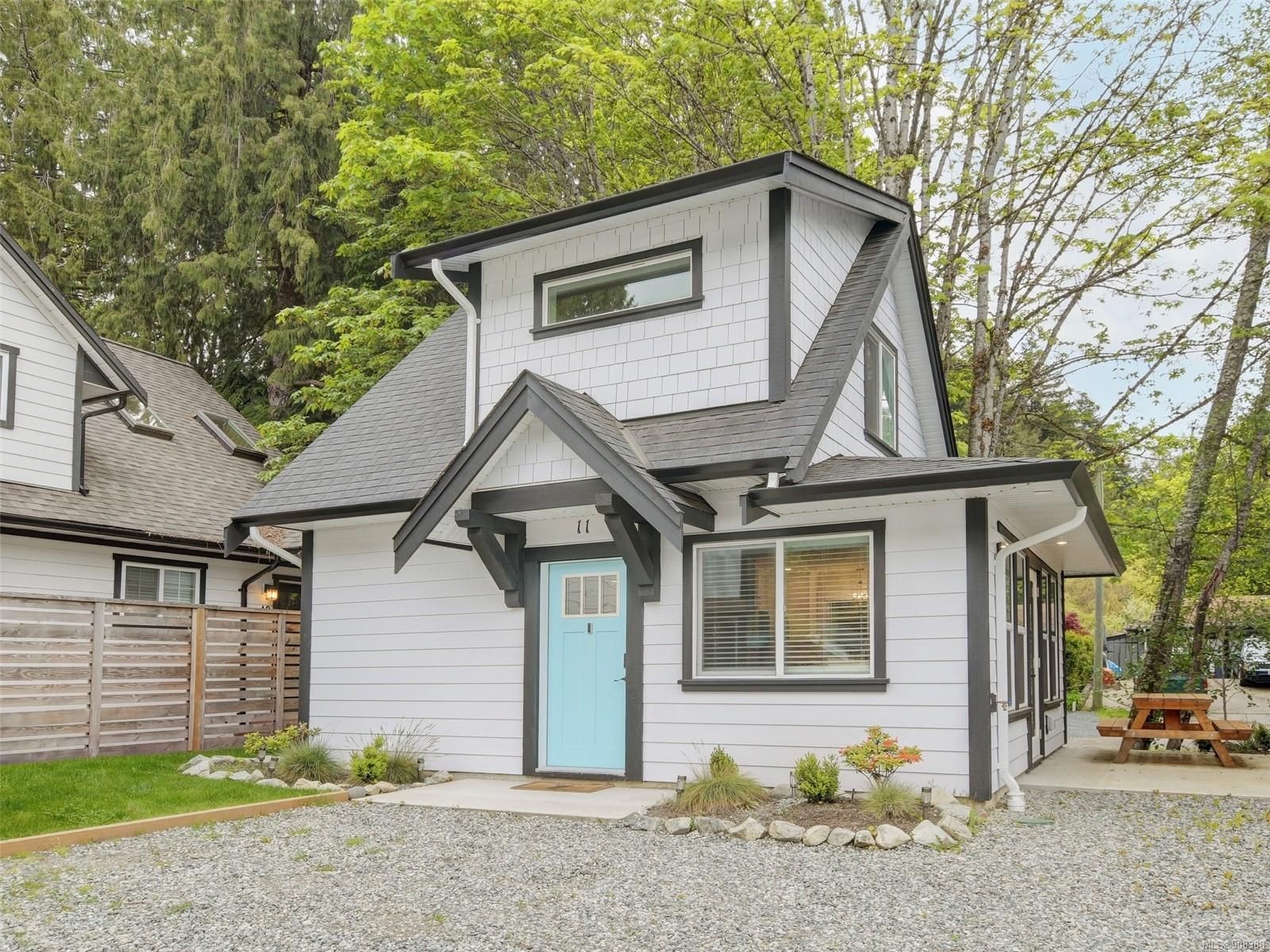
I have sold a property at 2261 Marlene Dr in Colwood
-560-wide.png)
With days getting longer and spring around the corner, now is the time to start thinking about getting around to those much needed home improvement projects you have been putting off while you wait for winter to pass. We want to provide home owners with cheap and easy(ish) ways to get the most enjoyment out of their home, while also increasing its value.
If your shabby old deck has become a source of shame, there’s usually a fix short of replacing it. Assuming the structure is sound, your deck can be restored. Depending on the desired look, you can spruce up a worn-out deck with a new stain or paint-based protective seal.
Begin by pressure washing to remove dirt and grime. Hand-scrub areas as needed. Don’t go too easy on the wood, you should be able to get it back to a semblance of newness. Once fully cleaned off, give the wood some time to dry. Then brush on a protective coat of semi transparent stain to protect it from the elements.
DIY not for you? We can recommend a professional.
-560-wide.png)
If price is important you should always sell your present home before buying another. It has the advantage in letting you know exactly how much money you will have available for your next purchase. Selling your home first allows you to place fewer conditions on your purchase which makes your offer more attractive to a seller. They often will demand more money to take a “subject to” offer which takes their home off the market. The other advantage is if you find a terrific house, chances are others will also find it attractive and you stand to lose it if you can’t make an unconditional offer.
-560-wide.png)
To put our inventory into context, last year broke the record for lowest inventory for the month of January. This January broke that record nearly in half and that lack of supply in the market really impacts what our end sales numbers are.
This means we need to see supply added to all types of housing and we need to establish a sustainable source of supply into the upcoming years to meet growth. The reality of housing is that it takes years to add new numbers and until we are better able to meet demand, our market will be under pressure. With the constrained and fast paced market, it's an excellent time to use the services of an experienced real estate agent. David & Agustin can help you identify a strategy and process for selling or buying - or selling and buying - a new home.
-560-wide.png)
We represent Buyers & Sellers, Seasoned Investors & New Home Buyers. Whatever your real estate goals, we can help make them reality.
-560-wide.png)
The first step to searching for a home is figuring out exactly what you can afford. By having a number that you can afford in mind, you’ll save a lot of time in the home search. After all, why look at a home that costs twice as much as you can afford?
(And if you’re feeling jealous about what someone else can afford versus what you can afford, just think about all the extra taxes and maintenance costs those people with the six-bathroom, eight-bedroom homes must pay.)Next, you’ll need to understand how a mortgage works. In basic terms, this is a long-term loan that you’ll repay over a period of 25-30 years. As part of this loan, you’ll pay interest, so, in the long run, you’re paying far more than the amount you’re borrowing.
But because your home value will almost certainly appreciate over time, you’re also gaining equity in the home, which is money you can recoup when you sell the home later.Online mortgage calculators can help you determine the purchase price you can afford by showing you what your approximate monthly payment will be.
The down payment you can afford will play a huge role in determining the home you can afford, the interest rate you’ll pay, whether you need mortgage premium insurance, and, ultimately, whether you’ll even qualify for a mortgage.
A down payment is an upfront lump sum you’ll pay before you apply any money you receive from a mortgage loan toward the home purchase. If you’re buying a $300,000 home, a $30,000 down payment would be 10%, for example.At the time of this writing, if you have less than a 20% down payment, you will need mortgage premium insurance. Understand that mortgage premium insurance protects the lending institution if you default on the loan; it doesn’t protect you in any way.
Mortgage premium insurance doesn’t reduce your principal either. It’s just money you’re giving to the bank for the ability to hold a mortgage loan that’s more than 80% of the property’s value. With some lending institutions, you may not even qualify for the mortgage if you have less than 20% available for a down payment.So it’s in your best financial interest to try to have at least a 20% down payment available. To find extra money to save for your down payment, consider making your own coffee at home or eating out less often. Little amounts can add up over time. Consider adding a side hustle on the weekends too.Beyond the savings you’ve accumulated, we’ve listed some sources for finding down payment money above, including low-interest loans and borrowing from your RRSP.
There’s one sure rule when it comes to home buying and finding the right mortgage: Interest rates are going to change over time. However, you don’t necessarily need to obsessively track those changes on an hour-by-hour basis. (In other words, give your Internet browser refresh button a rest.)Yes, interest rates are important, as a higher interest rate means you won’t be able to borrow as much money as you can with a lower rate. However, don’t settle for a home you don’t really want because you want to make the purchase quickly before interest rates increase. Rather than freaking out over interest rate movements, you’re better served by doing a few other things to save some money on your mortgage. For example, try shopping around at different banks to find the best interest rate.
Work to improve your credit score so you qualify for a lower interest rate. Most importantly, save up for a larger down payment to eliminate the need to pay mortgage premium insurance.
Housing prices can seem hard to understand to a first-time home purchaser. You look at that huge number for the purchase price of the home listed on the realtor’s website, and you naturally freak out a bit, wondering how anyone could ever afford such a purchase. Instead, take a deep breath. Understand that the huge number simply doesn’t compute for most people. You’re not alone.Instead, use one of the mortgage calculators we listed earlier to break down the purchase price for the property into a monthly payment number that’ll be easier for you to understand and that’s easier to compare to a rent payment you’re making now.Just remember when comparing your proposed mortgage payment to your rental payment that you’ll have to add in utility costs to the monthly mortgage payment, especially if utilities are included in your current rent payment.
You’ll also have to pay for your own property maintenance and home repairs with a home purchase, whereas those items are covered for you when you’re renting. But with a home purchase, you’re building equity in the home, meaning it will grow in value at the same time your total loan value shrinks over time, which is a great feeling!
Finally, understand that the home buying experience feels great when you’re finished, but it can be extremely stressful while it’s occurring. First, you have the time invested in searching for homes, seeing homes in person, and applying for the mortgage. Then, if you find a home you love, you have the stress of trying to figure out what to offer for a price, all while hoping someone else doesn’t swoop in and put in a better bid than you.
If the seller ends up accepting your bid, you still may have to work through several conditions before the sale goes through. It all can be very stressful. So try to stay calm throughout the process. Don’t lets the highs and lows of this process discourage you. Yes, we know: That’s easier said than done. But if you understand ahead of time there’s a potential of a roller coaster of emotions, you hopefully can keep your emotions somewhat grounded during the overall process.Also understand that – as a first-time homebuyer – you may not be able to afford a home in the exact location you want, with the exact features you want, or with the yard size you want. You’re probably going to have to compromise on a few items.But don’t be afraid to make a few sacrifices in your first home. What you may find is that you really don’t miss those features you thought you had to have once you move into the first house.
-560-wide.png)
Listings are down over 30% and buyers have bought up the new inventory and then some, with sales volume up 57% over a year ago. It is commonplace to see bidding wars and sales well over the asking price across all single family home price points. In this market, every detail in your offer makes an impact on whether it is accepted.
Get out and see the property immediately – you only have 24-48 hours to view the property and decide if you want to submit an offer.
Submit an unconditional offer – Sellers will often accept unconditional offers over conditional offers even if the sale price is a little bit less ($5-20k). Get organized and be selective in your purchasing decisions. Going unconditional gives you the best chance of success.
Give the Sellers their preferred closing dates – making the transaction convenient for the seller makes them more likely to accept your offer.
Shorten the subject period – If you must have a subject to inspection or financing make it short as possible. Reducing your due diligence to 5-7 days will make your offer stand out.
Go in at your best price – if it’s really the perfect home go in with your best foot forward. Don’t get bogged down trying to save $5,000 to $20,000 on the purchase price. In the long run, it will make very little difference to your mortgage payments and re-sale profit. Don’t regret losing out on your perfect home over nominal amounts of money.
In the current market, being quick to act is crucial. The average number of days on the market has reduced significantly in January 2021 as buyers get a head-start on the spring homebuying season. This demand is fueled by rock-bottom interest rates and a preference for single-family homes.
If you’d like help navigating and capitalizing on the current real estate market, please don’t hesitate to reach out.